How we got our ATF licence, and what it really cost
It took us about a year and a half and around £14,000 in fees, paperwork and site work to get Amber Autos licensed as an Authorised Treatment Facility (ATF). Staying licensed costs far more than getting there. This is what the process involved, what it cost, and what I’d tell anyone starting today.
What is an ATF?
An Authorised Treatment Facility is a site licensed by the Environment Agency to take in end-of-life vehicles, remove the hazardous parts and fluids, and recycle what’s left. It’s also the only kind of site that can issue the Certificate of Destruction a car owner needs when their car is scrapped.
We needed one because, as I wrote in how we built Amber Autos, the council told us we couldn’t keep breaking cars without it.
Why we hired a consultant
We hired a consultant, Paul Downing, and he handled most of the paperwork. For a first-timer it’s a lot: an environmental management system, site and drainage plans, and a detailed Fire Prevention Plan, all written the way the Environment Agency expects.
I wouldn’t try it without one. He knew what the Environment Agency would ask for before they asked.
What does an ATF site need?
Most of the work is about one question: if something goes wrong, does anything harmful leave the yard? These are the requirements that shaped our site.
- Fire water containment. This is the most important one. If the yard catches fire and the fire service pours water on it, that water must not leave the site. The Environment Agency’s guidance assumes 1,800 litres of water per burning car. We keep at most three cars waiting to be depolluted, so we had to be able to hold 5,400 litres. With a kerb across the entrance and booms the staff are trained to put down, our yard can hold around 60,000 litres. We built the kerb ourselves, for around £1,500 in materials.
- A solid concrete floor across the whole yard. The Environment Agency’s main concern is that no hazardous waste gets into the soil or the drains, so the ground has to be impermeable. Our yard was already concreted throughout, and that was a huge factor in getting approved. Laying concrete over a whole yard is a major cost if you have to do it yourself.
- A sealed interceptor under the ground, so oil and fuel can’t reach the drains. Ours was already built into the yard, which saved us a lot. If your site doesn’t have one, budget for it before anything else.
- A Fire Prevention Plan. Ours sets out where everything is stored, a quarantine area with 6 metres of clear space around it, and fire checks three times a day. Cars waiting for depollution never stay overnight, and waste tyres leave within 24 hours.
- Full CCTV coverage of the site.
- A technically competent manager, which in practice means a WAMITAB Level 4 qualification.
- A trained first aider on site.
- A waste carrier registration and a scrap metal dealer licence from the council.
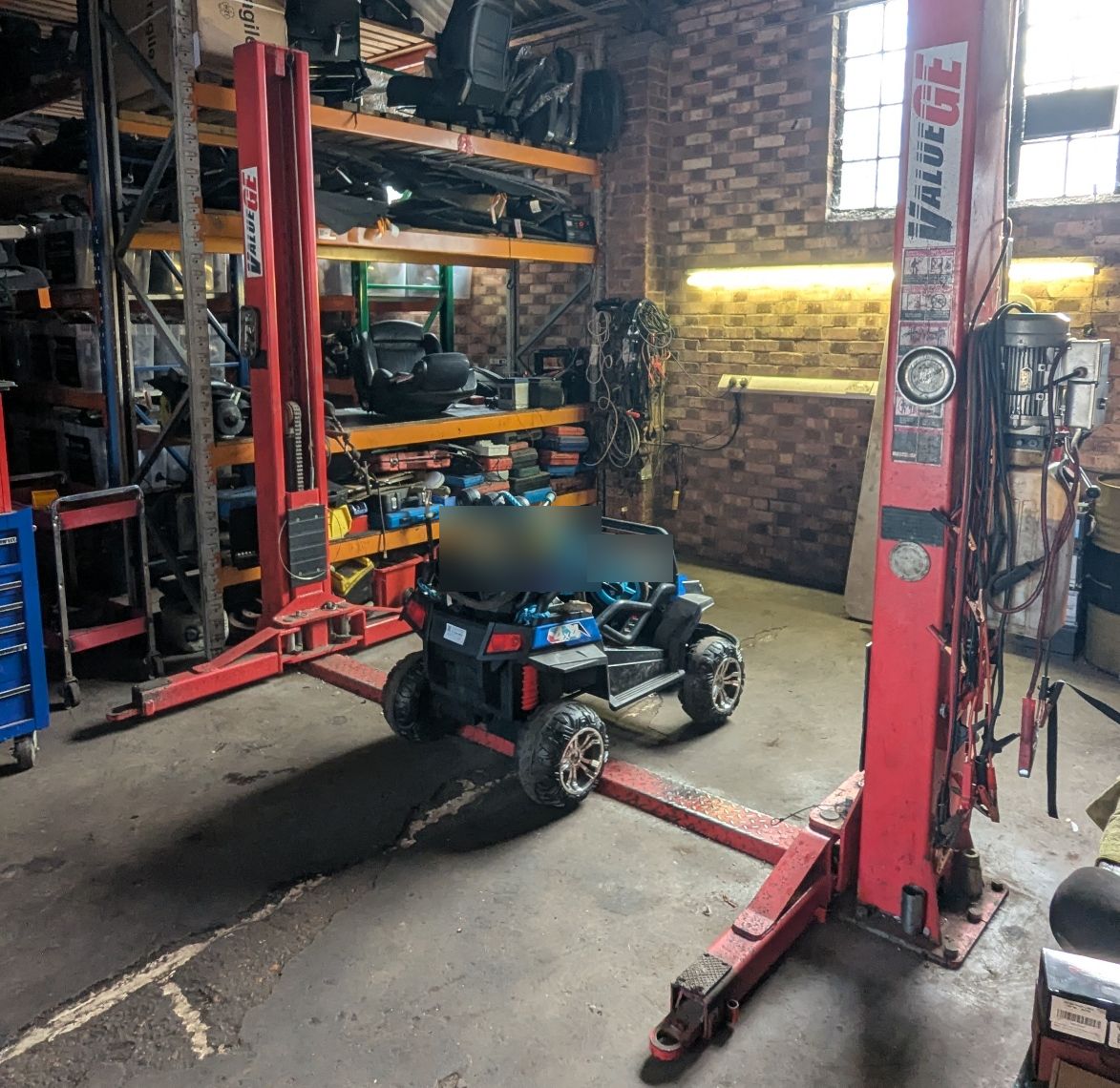
Our dismantling unit. Concrete floor throughout, and parts stored under cover.
How much does an ATF licence cost?
These are the one-off costs of getting licensed, excluding VAT:
| Item | Cost |
|---|---|
| Consultant | £5,450 |
| Environment Agency permit application | £3,926 |
| WAMITAB Level 4 qualification | £1,793 |
| Answering the Environment Agency’s requests for more information | £600 |
| Kerb at the entrance (materials, we built it ourselves) | about £1,500 |
| Emergency first aid course | about £350 |
| Waste carrier registration | £159 |
| Total | about £13,800 |
That’s with the concrete floor and interceptor already in place, and our own labour on the kerb. Building an interceptor, or paying someone to do the groundwork, would add a lot more.
The part people don’t budget for is staying licensed:
| Item | Cost per year |
|---|---|
| Rent | around £30,000 |
| Liability insurance | £2,843 |
| Trader insurance | about £2,500 |
| Interceptor cleaning and maintenance | about £2,000 |
| Hazardous waste collections, twice a year (oily rags, filters, absorbents) | about £900 |
| Waste oil collection | about £30 a time |
Each hazardous waste collection comes with its own transport and consignment note charges, so even a small pickup costs around £450. We’re a small yard that can only hold three vehicles at a time, so twice a year is enough for us. Bigger yards pay far more. Waste oil is the cheap one: our last collection of around 1,100 litres cost £30. On top of that, the scrap metal dealer licence costs around £750 and has to be renewed. All in, it’s more than £38,000 a year before we’ve bought a single car.
How long does an ATF licence take?
For us, about a year and a half. COVID was the biggest blocker. Government bodies were short of staff, and everything moved slowly. Our Fire Prevention Plan alone went from first draft to final version over more than a year, after the Environment Agency came back with questions.
The waiting was the hardest part. We’d paid a lot upfront, and we had no idea whether we’d be approved. Our consultant said we could start some dismantling while the paperwork was in progress, but without the licence in hand we never felt safe committing to it. So we carried on as a one-stop garage, kept listing spare parts on eBay, and waited.
Then one day an email arrived with the approval. In June 2024, after a year and a half, we were licensed. We were massively happy.
The first inspection
Our first inspection from the Environment Agency officer went smoothly, with one lesson. We’d accidentally put an oily rag in with the general waste.
It sounds small, but it was a big flag. Anything contaminated with oil is hazardous waste and has to be kept separate. We got a few warnings, fixed it straight away, and haven’t made that mistake since.
The paperwork never stops
Getting the licence is the start, not the end. Every vehicle we collect or receive has to be recorded, along with every Certificate of Destruction we issue. That needs a proper management system. Every yard does it its own way, but the records have to be complete, because we submit reports every three months and once a year.
Then there’s accounting. Once your turnover passes the VAT threshold, currently £90,000 over any 12 months, you have to register for VAT. From then on you charge 20% VAT on everything you sell and pay it to HMRC, minus the VAT on your costs. On used parts with tight margins, that changes your pricing completely. Plan for it before you reach the threshold, not after.
What I’d tell anyone starting today
- Check your site before you sign a lease. An existing interceptor, sound concrete and room to contain fire water can save you thousands.
- Hire a consultant who’s done it before. The fee is worth it for the questions they answer before the Environment Agency asks them.
- Budget for running costs, not just the licence. The licence is the cheap part.
- Keep the business alive while you wait. The eBay shop kept money coming in for us through the whole process.
- Separate your waste from day one. Oily rags, batteries, fluids and tyres each have their place. Inspectors notice.
- Get your records and VAT sorted early. A good system for vehicles and CoDs, and a plan for VAT, save a lot of pain later.
It was slow, expensive and stressful. But it turned a struggling garage into a licensed, and now VRA Certified, recycling yard.